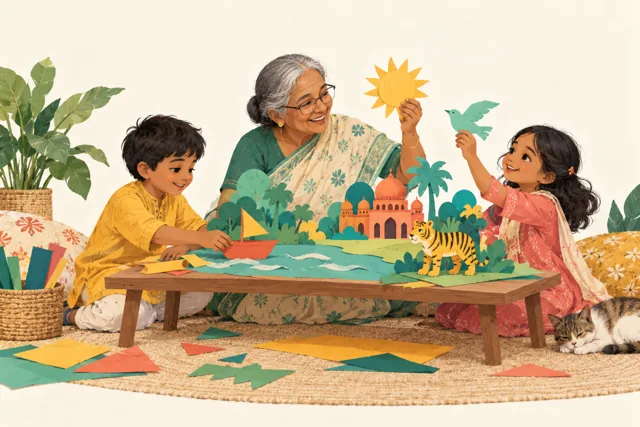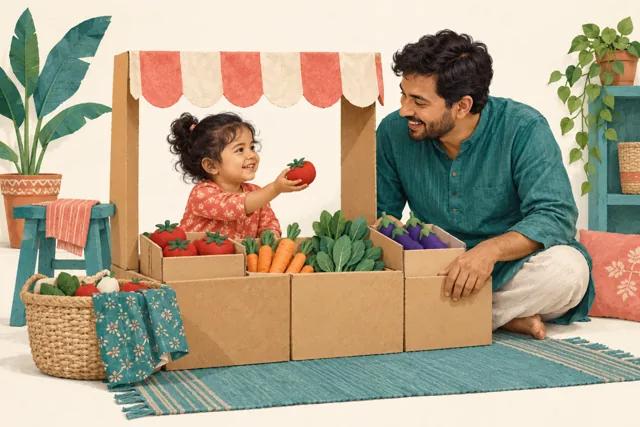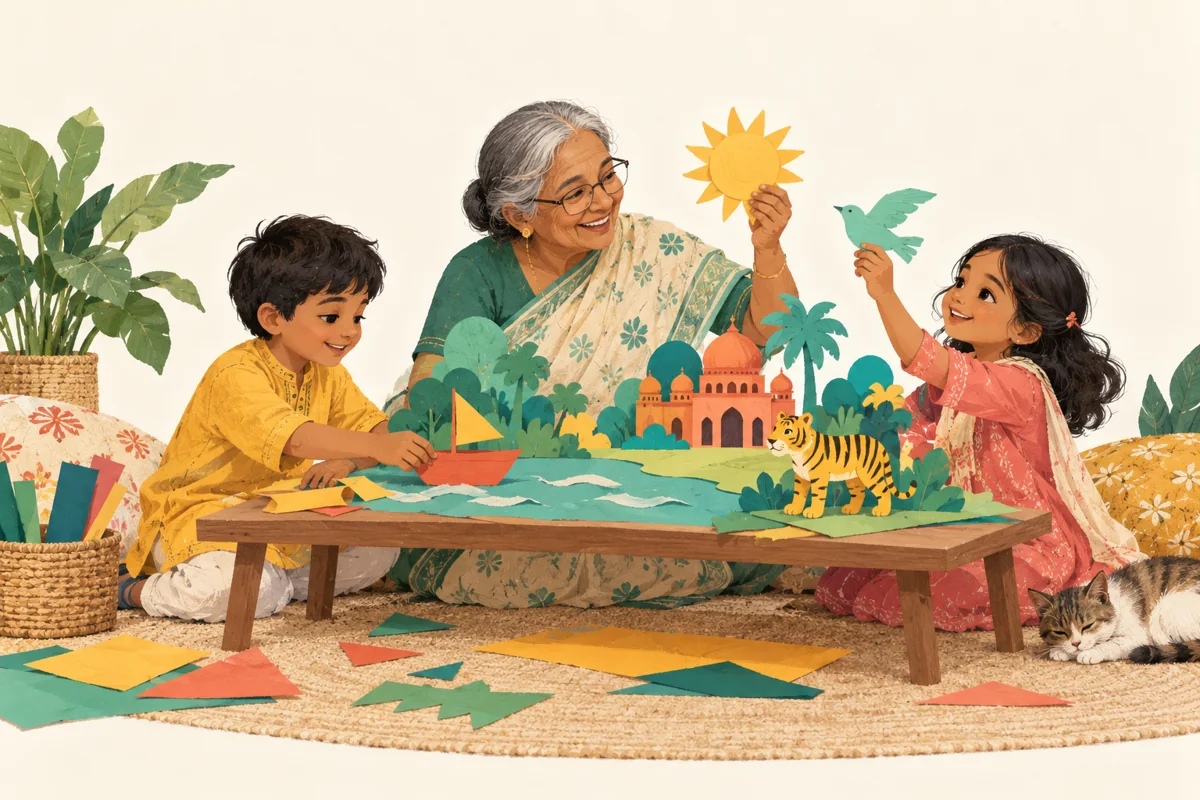
Choose pictures with room for an idea
Start with three pictures you are entitled to use privately, such as your own drawings or photographs without private identifying details. They do not have to match. A bus, a tree and a cup can belong to the same invented story if you decide they do. Avoid turning the selection into a search for perfect materials; rough drawings can carry the idea.
Keep this a shared creative activity under an adult's supervision, using materials appropriate to your household. No age-linked result is promised. A child can choose a picture, suggest a sound, contribute a sentence or simply watch. An adult can do the writing and arranging without making those parts prerequisites for joining in.
Give one thing a reason to move
Choose a character from one picture or invent someone who could appear in it. Ask what they are trying to do. Perhaps a person is taking a cup to a picnic, or a bus is looking for a place to park in an imaginary town. A small intention gives you something to continue in the next scene.
Offer an idea yourself if the question receives no answer. “I think the bus driver has lost the picnic map” is an invitation, not the correct answer. The child can agree, change it or introduce something unrelated. You can follow that contribution without explaining why it would not happen in the real world. This is an invented story, clearly presented as such.
Let the second picture change the plan
Place the next picture beside the first and consider what it adds. A tree might mark the meeting place, become a talking character or hide the missing map. Avoid making every picture a naming exercise. You are connecting events, and the connection can be playful rather than logical.
If several ideas appear, choose one for this version and keep the others for another telling. Say, “Today the tree keeps the map; next time it could be the bus stop.” This allows different versions without arguing about which one is official. The story belongs to the people making it, not to a fixed answer waiting to be discovered.
Give the third picture an ending
An ending can be small: the cup reaches the picnic, the map becomes a tablecloth or the bus decides to stay by the tree. It does not need a lesson or a reward. Ask whether the story feels finished, and let an adult close it if everyone has moved on. Stopping is allowed even when an imagined problem remains unsolved.
Try retelling the three scenes in a few sentences. Keep the child's unusual wording if they want it included. Do not silently replace every surprising detail with a more polished plot. If you write the story down, read it back so the contributors recognize their own version.
Turn one version into a small booklet
An adult can arrange the pictures on separate pages and add the chosen sentences. Give the story a title together. The title can be literal, such as “The Bus and the Picnic Cup,” rather than clever. Add a simple note that it is a family-made story if you keep it beside published books.
Ask before sharing a recording or a picture of the booklet. A homemade story does not need a public audience to be worthwhile. If photographs contain people's faces, check the relevant sharing permissions separately. Using a family image as the starting point for fiction does not make the invented events a true account about the person pictured.
Change the order another day
You can put the same three pictures in a different sequence and make a new story. The cup might become the starting point, while the bus arrives only at the end. Compare the versions for amusement, not to choose which one proves greater skill. Keep or discard each booklet according to the space and interest you have.
For a first attempt, use three pictures already available, one ordinary intention and a few spoken sentences. Leave room for the story to be odd, brief or unfinished. You are making something together, not turning book time into a test or reproducing a published author's story.